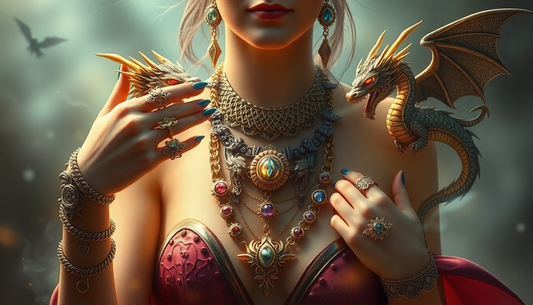

Exploring the Captivating History of Dragons Across Cultures
Dragons have captivated human imagination for thousands of years, appearing in the mythologies, legends, and artistic traditions of civilizations across the globe. These magnificent creatures, whether depicted as fearsome monsters or benevolent guardians, represent some of humanity's most enduring symbols. From the ancient civilizations of Mesopotamia and Egypt to the sophisticated cultures of China and Japan, dragons have played pivotal roles in shaping cultural narratives, religious beliefs, and artistic expression. This comprehensive exploration delves into the fascinating history of dragons across different cultures, examining how these legendary beings have evolved, what they symbolize, and why they continue to captivate our collective imagination in the modern world.
The Ancient Origins of Dragon Mythology
Dragons in Mesopotamian Culture
The earliest documented references to dragon-like creatures appear in the ancient texts and artifacts of Mesopotamia, one of humanity's oldest civilizations. The Sumerians and Babylonians, who flourished in the region between the Tigris and Euphrates rivers, created some of the first written accounts of serpentine monsters. Among the most significant is Tiamat, a primordial dragon goddess featured prominently in the Babylonian creation myth, the Enuma Elish. This ancient epic, composed around the 18th century BCE, describes Tiamat as a massive, chaotic sea serpent who embodies the forces of chaos and destruction.
In the Enuma Elish, Tiamat is portrayed as a powerful deity who initially creates other gods but eventually becomes their adversary. The younger gods, threatened by her dominance, seek a champion to defeat her. Marduk, a rising deity, accepts the challenge and ultimately vanquishes Tiamat in an epic battle. This mythological narrative reflects the Mesopotamian worldview, where dragons represented the untamed forces of nature that civilization must overcome to establish order. The defeat of Tiamat symbolizes the triumph of organized society over chaos, a theme that would resonate throughout dragon mythology in various forms across different cultures.
The Mesopotamian dragon was typically depicted as a hybrid creature, combining features of multiple animals. These beings often possessed the body of a serpent, the wings of a bird, and the head of a lion or bull. This composite nature made them uniquely powerful and otherworldly, embodying multiple aspects of nature's raw power. The artistic representations found on cylinder seals and temple walls demonstrate the sophisticated understanding these ancient peoples had of these mythical creatures.
Dragons in Ancient Egyptian Mythology
Ancient Egypt, another cradle of civilization, developed its own distinct dragon mythology, though the Egyptians used different terminology and conceptual frameworks. Rather than calling them dragons, the Egyptians referred to serpentine creatures as serpents or demons, with Apophis (also spelled Apep) being the most prominent example. Apophis represented chaos, darkness, and destruction in Egyptian cosmology, embodying the opposite of Ma'at, the principle of order and harmony that governed the universe.
Apophis was depicted as an enormous serpent or dragon-like creature that dwelled in the depths of the Duat, the Egyptian underworld. According to Egyptian mythology, Apophis posed a constant threat to Ra, the sun god, during his nightly journey through the underworld. Each night, Ra would travel through the twelve hours of darkness in his solar barque, and Apophis would attempt to devour him, threatening to plunge the world into eternal darkness. The daily victory of Ra over Apophis symbolized the eternal struggle between light and darkness, order and chaos, a fundamental concept in Egyptian religious thought.
The Egyptians also revered certain serpentine creatures as protective deities. The cobra, particularly the uraeus or sacred cobra, was associated with royalty and divine protection. Wadjet, the cobra goddess, was believed to protect the pharaoh and the land of Egypt. This duality in Egyptian dragon mythology—where serpents could be both destructive demons and protective deities—reflects the complex understanding these ancient peoples had of nature's dual aspects.
The artistic depictions of Apophis in Egyptian tomb paintings and papyri show a massive serpent, often with multiple coils, sometimes depicted being defeated by Ra or other protective deities. These images served both religious and protective purposes, as Egyptians believed that depicting the defeat of chaos would help ensure its continued subjugation in the real world.
Dragons in Asian Cultures
Chinese Dragons: Symbols of Power and Prosperity
Chinese dragon mythology represents one of the most sophisticated and enduring dragon traditions in human history. Unlike the predominantly negative portrayal of dragons in Western cultures, Chinese dragons are overwhelmingly positive symbols, associated with power, wisdom, prosperity, and good fortune. The origins of Chinese dragon mythology are deeply rooted in the culture's ancient past, with evidence of dragon symbolism appearing in artifacts dating back over 8,000 years.
The Chinese dragon, known as the "Long" or "Lung," is a composite creature combining features of multiple animals: the head of a camel, horns of a deer, eyes of a rabbit, scales of a fish, claws of an eagle, and the tail of a cow. This unique composition reflects the Chinese philosophical concept of harmony and balance, with the dragon representing the integration of diverse elements into a unified whole. The dragon's body is typically depicted as serpentine, allowing it to move fluidly through both water and air.
In Chinese cosmology, dragons are associated with water, rainfall, and agricultural fertility. This connection stems from the practical reality of ancient Chinese civilization, where water management and rainfall were crucial for survival. Farmers depended on adequate rainfall for their crops, and droughts could spell disaster. The dragon, as a water deity, became the focus of prayers and rituals designed to bring rain during dry seasons. Dragon dances, still performed during Chinese festivals, originated from these ancient rain-bringing ceremonies.
The Chinese dragon is also intimately connected to imperial power and authority. The emperor was considered the "Son of Heaven," and the dragon became his exclusive symbol. The dragon throne, where the emperor sat, represented the seat of power and cosmic authority. Imperial robes were adorned with dragon motifs, and the dragon's image appeared throughout the imperial palace. This association between dragons and imperial authority was so strong that common people were forbidden from using dragon imagery in their clothing or homes, as it was considered a violation of the emperor's exclusive right to the symbol.
Chinese dragons are typically classified into several types, each with distinct characteristics and associations. The Celestial Dragon, or Tian Long, guards the heavenly palaces and pulls the chariots of the gods. The Spiritual Dragon, or Shen Long, brings rain and controls water. The Earth Dragon, or Di Long, controls rivers and streams. The Treasure Dragon, or Fu Cang Long, guards hidden treasures and wealth. The Underworld Dragon, or Di Xia Long, rules the underworld and underground waters. Each type of dragon has specific roles and responsibilities within the cosmic order, reflecting the Chinese understanding of a hierarchical and interconnected universe.
The dragon's association with the number nine is particularly significant in Chinese culture. Nine is considered the most auspicious number, and dragons are often depicted with nine characteristics or in groups of nine. The dragon's pearl, or "Zhu," is another important symbol, often depicted as a glowing orb that the dragon chases or holds. This pearl represents wisdom, spiritual energy, and the essence of the dragon's power.
Japanese Dragons: Guardians of Water and Wisdom
Japanese dragon mythology, while influenced by Chinese traditions, developed its own distinct characteristics and cultural significance. The Japanese dragon, known as "Ryū," shares many features with its Chinese counterpart but has evolved to reflect Japanese cultural values and environmental conditions. Japan's island geography and relationship with the sea significantly influenced how dragons were conceptualized and revered.
Japanese dragons are closely associated with water in all its forms: oceans, rivers, lakes, and rainfall. The dragon king, or "Ryūjin," rules over the sea and controls the tides. According to Japanese mythology, Ryūjin possesses magical jewels that control the tides, and these jewels are central to several important myths and legends. The dragon's connection to water made it a particularly important deity in a maritime nation like Japan, where the sea provided both sustenance and danger.
In Japanese Buddhism, which significantly influenced Japanese dragon mythology, dragons are considered one of the eight divine protectors. The dragon is associated with wisdom, strength, and protection. Buddhist temples often feature dragon imagery, particularly in architectural elements like roof tiles and decorative panels. The dragon's role as a protector of Buddhist teachings reflects the integration of indigenous Japanese beliefs with Buddhist philosophy.
Japanese art and literature feature numerous dragon tales and legends. One of the most famous is the story of the Dragon King's daughter, who falls in love with a human prince. This tale, which appears in various forms throughout Japanese literature, explores themes of love, sacrifice, and the boundary between the human and divine worlds. Such stories reflect the Japanese cultural interest in the intersection of the natural and supernatural realms.
The Japanese dragon, like its Chinese counterpart, is depicted as a benevolent creature, though it can be temperamental and dangerous if angered or disrespected. This duality reflects the Japanese understanding of nature as both nurturing and potentially destructive. The dragon's power over water means it can bring life-giving rain or devastating floods, making it a force to be respected and appeased through proper rituals and reverence.
Dragons in Korean and Vietnamese Cultures
Korean and Vietnamese dragon traditions, while influenced by Chinese mythology, have developed unique characteristics reflecting their distinct histories and environments. In Korea, dragons are revered as symbols of power and protection, similar to their role in Chinese culture. The Korean dragon, or "Yong," appears in traditional art, architecture, and folklore, often depicted in a style that blends Chinese influences with distinctly Korean artistic elements.
Korean mythology includes various dragon legends, such as the story of the dragon that guards the sacred mountain Baekdudagang. Dragons in Korean culture are associated with water, fertility, and imperial authority, much like in China, but Korean dragons often have a more localized, regional significance, tied to specific mountains, rivers, or regions. This reflects Korea's geography and the importance of local water sources to agricultural communities.
Vietnamese dragon mythology similarly reflects Chinese influences while maintaining distinct Vietnamese characteristics. The Vietnamese dragon, or "Rồng," is central to Vietnamese national identity and mythology. According to Vietnamese legend, the Vietnamese people are descendants of the dragon and the fairy, a mythological union that explains the Vietnamese people's connection to both the land and the sea. This origin myth, known as the "Dragon and Fairy" legend, is fundamental to Vietnamese cultural identity and appears in various forms throughout Vietnamese literature and art.
The Vietnamese dragon is particularly associated with the Red River and the sea, reflecting Vietnam's geography and history. The dragon's role in bringing water and fertility is celebrated in Vietnamese festivals and rituals, particularly during the Lunar New Year celebrations. Dragon dances and dragon boat races are important cultural practices that honor the dragon's significance in Vietnamese life and spirituality.
Dragons in European and Western Traditions
Medieval European Dragons: Monsters and Symbols
European dragon mythology developed quite differently from Asian traditions, with dragons typically portrayed as fearsome monsters rather than benevolent deities. This fundamental difference reflects distinct cultural values, religious beliefs, and environmental contexts. Medieval European dragons were often depicted as evil creatures that hoarded treasure, terrorized villages, and needed to be slain by brave knights or saints.
The medieval European dragon was typically portrayed as a large, winged reptile with four legs, breathing fire and possessing scales that could not be pierced by ordinary weapons. These dragons were often solitary creatures, living in caves or remote mountains, guarding vast treasures accumulated through centuries of plundering. The image of the dragon as a greedy hoarder became deeply embedded in European literature and folklore, appearing in works like Beowulf and various Arthurian legends.
One of the most famous European dragon slayers is Saint George, whose legend became widespread throughout medieval Europe. According to the legend, Saint George slayed a dragon that was terrorizing a village, saving a princess in the process. This tale, which has numerous variations across different European cultures, became a symbol of good triumphing over evil, with the dragon representing chaos, paganism, or demonic forces that must be overcome by virtue and faith. Saint George became the patron saint of several European nations, and his dragon-slaying feat became an iconic image in European art and heraldry.
The association of dragons with evil and paganism in medieval Europe was strongly influenced by Christian theology. In Christian symbolism, the dragon became associated with Satan and demonic forces. The Book of Revelation describes a great red dragon that represents Satan, and this biblical imagery significantly influenced how Europeans conceptualized dragons. The dragon became a symbol of the pagan past that Christianity was meant to overcome, and the slaying of dragons in medieval literature often represented the triumph of Christian civilization over pagan superstition.
However, not all European dragons were purely evil. In some traditions, particularly in Welsh and Celtic mythology, dragons held more ambiguous or even positive roles. The Welsh dragon, or "Ddraig," appears on the Welsh flag and is associated with power and protection. Welsh mythology includes dragons as significant creatures, sometimes portrayed as guardians or symbols of national identity rather than purely evil monsters.
Dragons in Norse Mythology
Norse mythology features several significant dragon figures, most notably Níðhöggr, a massive dragon or serpent that gnaws at the roots of Yggdrasil, the world tree. According to Norse cosmology, Níðhöggr represents entropy and destruction, constantly working to undermine the stability of the cosmos. This dragon embodies the Norse understanding of a cyclical universe where creation and destruction are eternal opposing forces.
Another important Norse dragon is Jörmungandr, the Midgard Serpent, a creature so enormous that it encircles the entire world, holding its tail in its mouth. Jörmungandr is the child of Loki, the trickster god, and is destined to play a crucial role in Ragnarök, the Norse apocalypse. During Ragnarök, Jörmungandr will rise from the ocean, causing tidal waves that will flood the land. This serpent represents the chaotic forces that will ultimately bring about the end of the current world order.
The Norse dragon Fáfnir, featured in the Völsunga saga and the Nibelungenlied, is a dragon that guards a cursed treasure. Fáfnir was originally a dwarf who was transformed into a dragon by a magical curse, and he became obsessed with guarding his hoard. The hero Sigurd slays Fáfnir, obtaining the treasure and the dragon's wisdom. This tale, like many European dragon legends, involves a hero overcoming a dragon to achieve glory and gain valuable rewards.
Dragons in Mesoamerican and Other Cultures
Aztec and Mayan Dragon-Like Creatures
While Mesoamerican cultures did not have dragons in the exact sense that Asian or European cultures did, they had serpentine deities and creatures that served similar mythological functions. The Aztecs revered Quetzalcoatl, the feathered serpent deity, who combined features of a bird and a serpent. Quetzalcoatl was one of the most important deities in Aztec religion, associated with wind, learning, and civilization. The feathered serpent represented the union of the earthly (serpent) and the divine (bird), embodying the integration of opposing forces.
The Mayan civilization similarly revered serpentine deities, particularly the Vision Serpent, which appears in Mayan art and mythology. The Vision Serpent was associated with shamanic visions and the connection between the earthly and spiritual realms. Mayan rulers were often depicted with serpent imagery, indicating their connection to divine power and their role as intermediaries between the human and divine worlds.
These Mesoamerican serpentine creatures, while not identical to Asian or European dragons, served similar mythological functions: they represented cosmic forces, divine power, and the connection between different realms of existence. The emphasis on feathered serpents in Mesoamerican cultures reflects the importance of birds in these societies and the integration of avian and reptilian symbolism.
Dragons in Hindu and Buddhist Mythology
Hindu mythology features several serpentine deities and creatures, most notably the Nagas, which are divine serpents or serpent-human hybrids. Nagas are not exactly dragons, but they share many characteristics with dragons in other cultures. Nagas are typically depicted as intelligent, powerful beings, sometimes benevolent and sometimes dangerous. The king of the Nagas, Shesha or Ananta, is an enormous serpent upon whom the god Vishnu rests during the intervals between cosmic creations.
In Hindu cosmology, Shesha represents infinity and eternity, supporting the entire universe on its countless heads. This serpent is not evil or chaotic but rather a fundamental aspect of cosmic order. The Nagas, while sometimes portrayed as obstacles or antagonists, are also revered as protectors and divine beings worthy of respect and worship.
Buddhist mythology incorporated Nagas from Hindu traditions, and they appear prominently in Buddhist art and literature. In Buddhism, Nagas are often depicted as protectors of Buddhist teachings and sacred sites. The Buddha is sometimes shown meditating under the protection of a Naga king, indicating the serpent's role as a guardian and protector. This integration of Nagas into Buddhist tradition reflects Buddhism's ability to incorporate and reinterpret elements from other religious traditions.
The Symbolism and Meaning of Dragons
Dragons as Representations of Chaos and Order
Across cultures, dragons frequently represent the tension between chaos and order, a fundamental theme in human mythology and philosophy. In many traditions, dragons embody chaotic, destructive forces that must be controlled or defeated to maintain cosmic order. The Mesopotamian Tiamat, the Norse Jörmungandr, and the Egyptian